
One library behind every buyer answer.
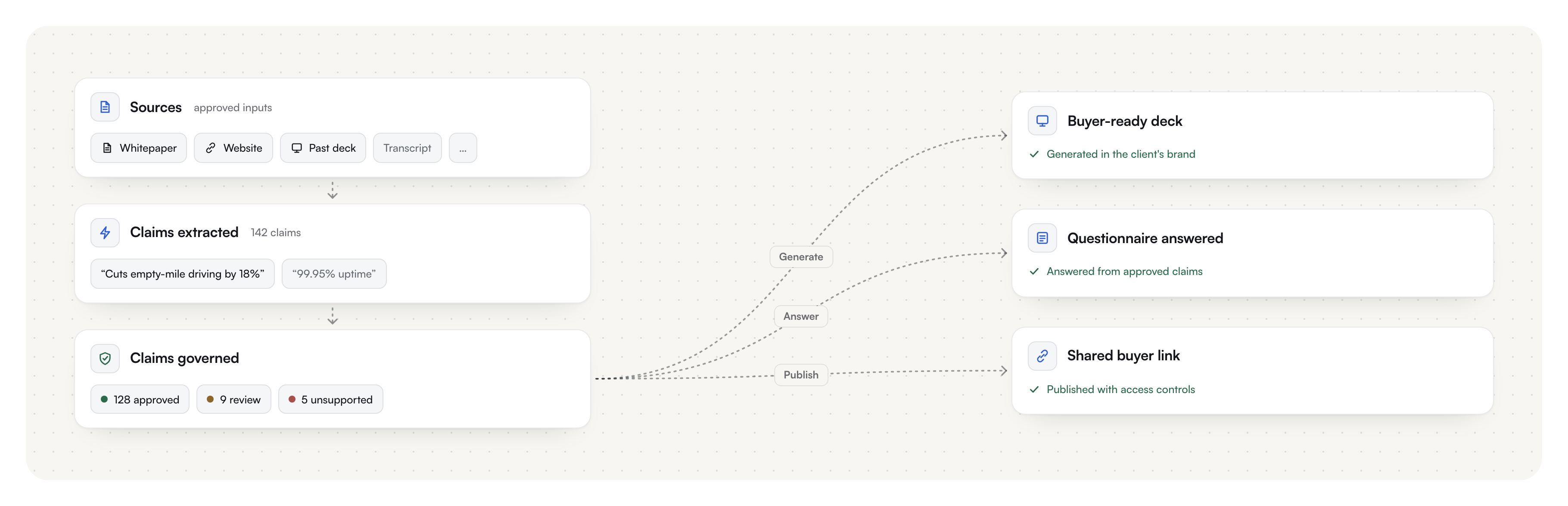
Approved sources become a governed claim library, then decks, documents, and questionnaire answers all draw from the same approved claims.
Turn your approved sources into a claim library, then answer every buyer surface from it — the deck you pitch and the security questionnaire you're sent — with every claim traced back to a source.
Built around the work sales, marketing, and security teams already do: answering buyers across decks, documents, and questionnaires — all grounded in the same approved claims.
Approved sources become a governed claim library, then decks, documents, and questionnaire answers all draw from the same approved claims.
Every answer follows your claim library, approved sources, brand kit, and review rules — nothing reaches a buyer that isn't backed.
Well-sourced claims move forward. Anything unsupported or ambiguous is flagged to a reviewer before it reaches a buyer.
Well-sourced claims flow into decks, documents, and questionnaire answers. Any unsupported or ambiguous claim is flagged to a reviewer before it reaches a buyer.
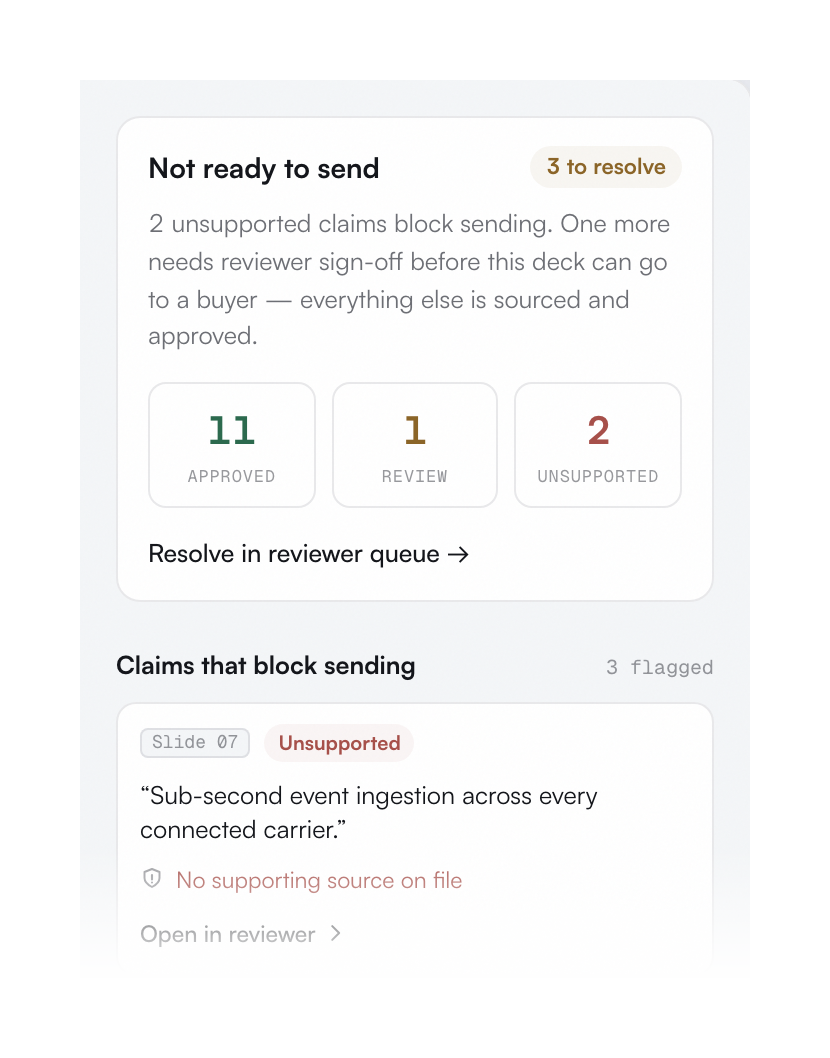
Teams can ask what's approved, where the evidence lives, and which artifact a claim is blocked in.
Pull context across sources, claims, and every artifact and answer sent, so reviewers see everything in one place.
Track blocked claims, stale sources, reviewer bottlenecks, and account readiness patterns.
Reviewer feedback makes the next deck, document, and answer sharper, safer, and faster to prepare.
Governed AI that turns approved sources into one claim library — and answers every buyer artifact from it.
Learn about AccountMadeA claim your website and your sellers disagree on is how deals stall in security review. Inconsistencies are flagged with the evidence gap before anything is sent.
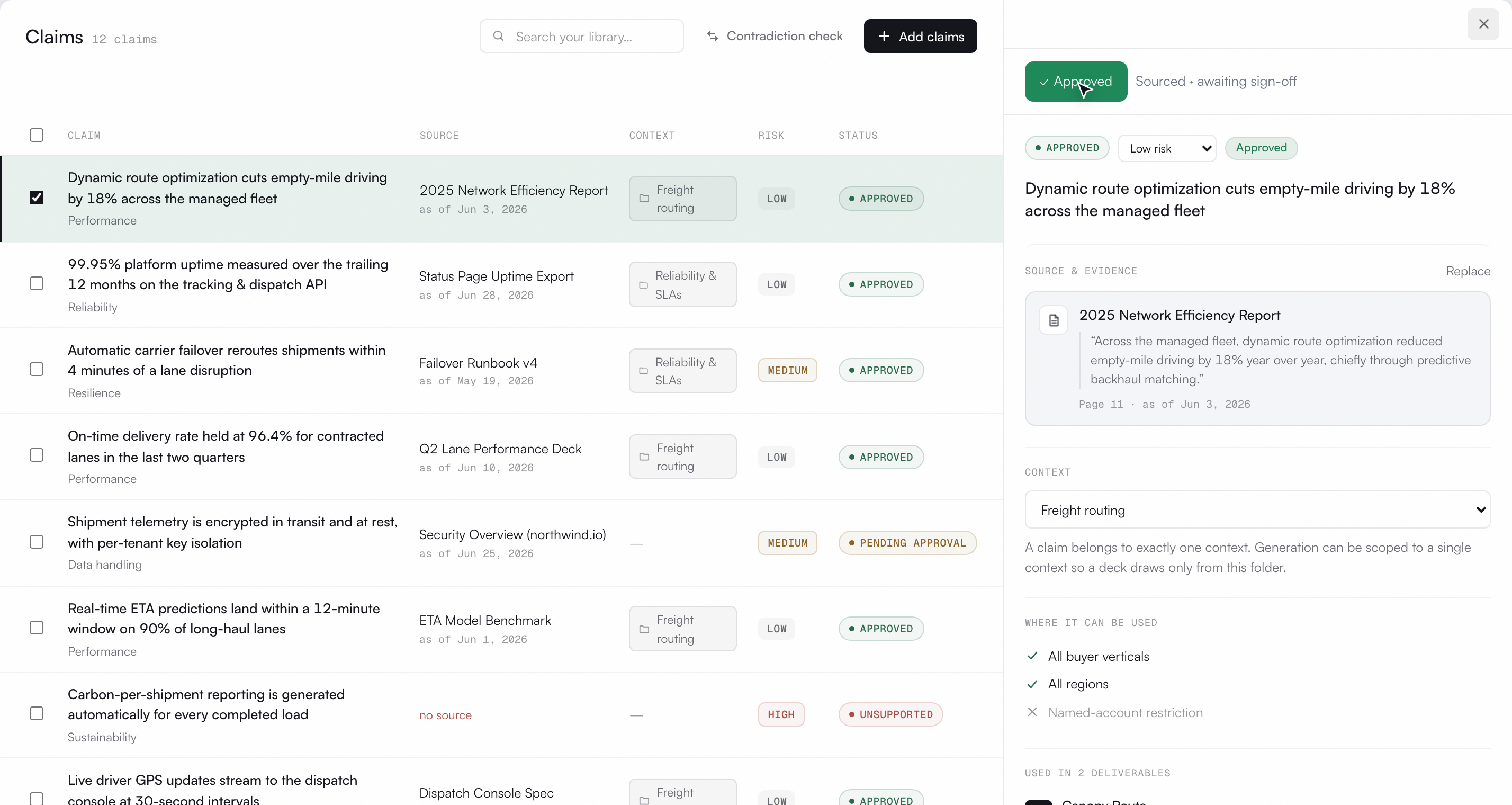
Claims, source coverage, reviewer state, and where each claim is used stay visible in one place before send.
See which claims are approved, which buyer artifacts use them, and which accounts are cleared to receive an answer.
When a SIG or CAIQ lands, draft answers from approved claims — every response traces back to a source instead of being retyped from memory.
Claims without adequate source coverage are flagged and the gap is routed to the right owner before a buyer sees it.
The same approved claims become a brand-true deck, a document, or an answer — reviewable before it's sent.
Generate, review, and export buyer-ready decks and documents in your brand instead of starting from scratch.
Put AccountMade Intelligence to work on your next deck, questionnaire, and claim review — every answer traced back to an approved source.